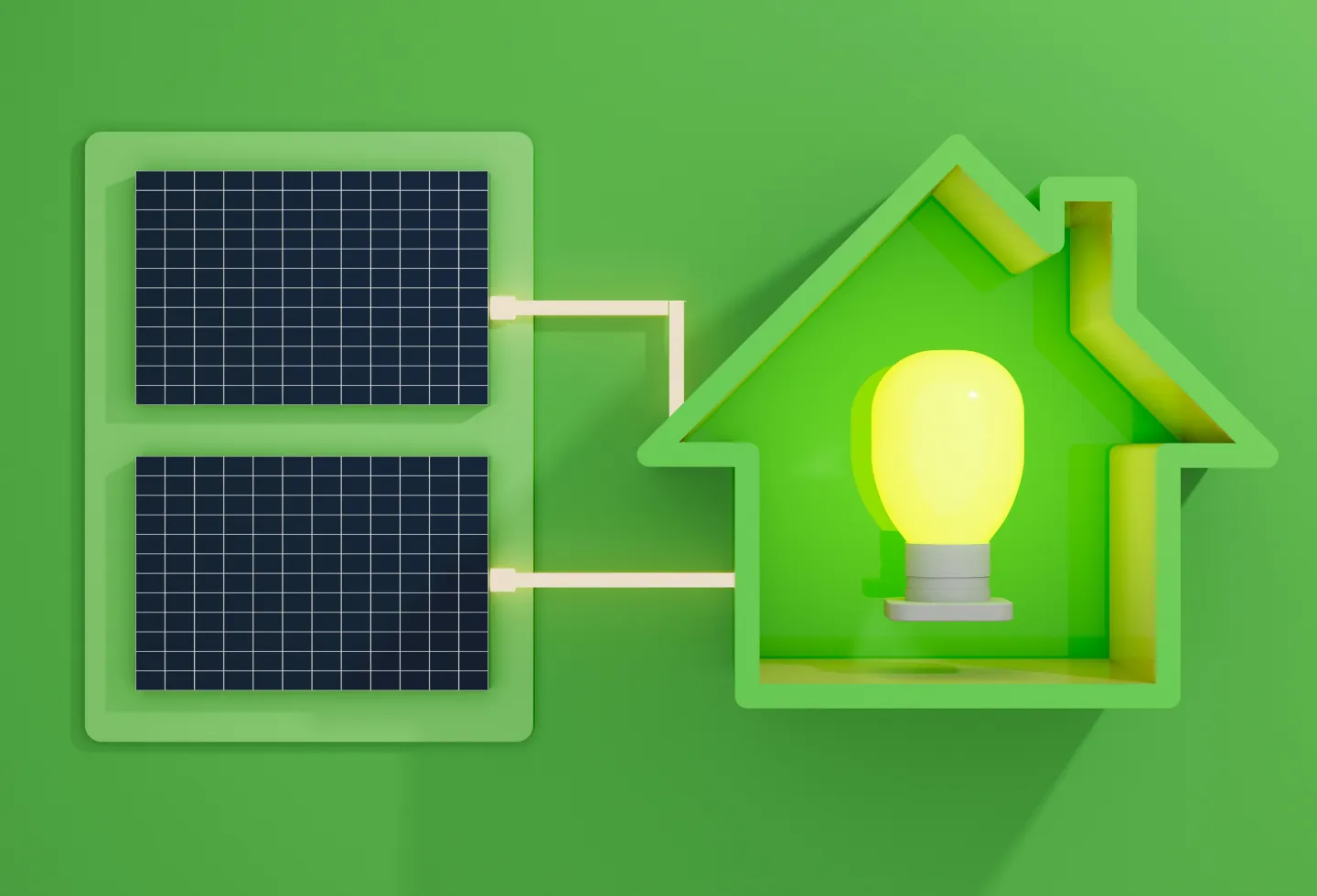



You’re in good company if you’re interested in how to make eco-friendly renovations on your home. A recent survey from This Old House found that eco-friendly home remodeling is a top priority for 13% of homeowners planning a renovation in 2025.
Knowing which energy-efficient upgrades to add can be confusing, given the overwhelming number of options and “greenwashing” marketing by companies. The Department of Energy recommends conducting a home energy audit to help you identify your home’s key areas of focus. We’ll explore some of the most impactful eco-friendly home renovations here.
Eco-friendly home renovations
Every home is unique, but some eco-friendly home renovations are more commonly recommended than others due to their high return on investment.
Whole-home heat pump
Typical cost: $8,000 to $30,000
Most homeowners spend over half of their energy costs simply on heating and cooling their homes, though regional variations naturally exist. Gas furnaces used to be the standard for home heating, but sales of heat pumps surpassed those of gas heating systems starting in 2021.
There are good reasons for it, too. Heat pumps are much more efficient at heating homes than traditional systems, and they also serve a dual purpose as effective air conditioning units in the summer. One recent study found that heat pumps would be cost-efficient purchases for 59% of U.S. homes, even without existing subsidies.
Homeowners could save up to 75% on their home heating costs by switching to a heat pump, making this one of the most recommended eco-friendly renovations for homeowners.
Solar panels
Typical cost: $24,000 to $56,000
The ultimate step in renewable energy is installing solar panels to reduce — or even eliminate — your reliance on the grid. Your house will need sufficient natural light for a solar panel array to work, but even homes in dreary places like Seattle can generate enough to power an entire home. If you can afford the cost of a solar battery bank to store power for when the sun’s not out, that dream is even easier to achieve.
The downside, of course, is the cost. Solar panels are among the more expensive eco-friendly home renovations, and many people need to finance them. On the bright side, solar panels are typically very durable, lasting 25 to 35 years. They can also provide a significant boost to your home value, with an ROI of around 30%, according to the 2025 Cost vs Value Report by the Journal of Light Construction.

Low-flow plumbing fixtures
Typical cost: $15 to $100 for showerheads, $30 to $75 for faucets, and $150 to $350 for toilets
Homeowners nationwide typically pay a water bill of $101 per month, and residents of some states, like Arizona, also face frequent water shortages.
You can help by replacing your plumbing fixtures with the Environmental Protection Agency’s WaterSense-approved products, which are certified to use less water overall. A WaterSense-certified toilet uses at least 20% less water per flush, for example.
ENERGY STAR appliances
Typical cost: $400 to $1,200 for dishwashers, $900 to $2,500 for washer-dryer combos, and $500 to $2,000 for refrigerators.
The Department of Energy also maintains an eco-friendly home products designation that you’ve probably seen in stores: the ENERGY STAR seal of approval (or, for those looking for maximum energy efficiency, the ENERGY STAR Most Efficient designation).
Home appliances consume 15% of a typical home’s energy usage. ENERGY STAR-approved refrigerators are around 9% more energy-efficient, while certified laundry machines use 20% to 25% less electricity. It’s something to consider the next time you need to replace an aging appliance in your home.
Smart thermostat
Typical cost: $70 to $500
Smart thermostats adjust your home’s heating and cooling based on how you actually use the home, while scaling the temperature back in areas where it’s not as necessary. According to the Department of Energy, dialing your home’s temperature back by 10 degrees for 8 hours a day, like when you sleep, can save up to 10% on your home’s energy usage.
Even better, installing a smart thermostat is one of the least expensive and easiest switches to make. Most homeowners can even do it themselves, especially with the easy step-by-step directions that accompany most smart thermostats these days.
Induction cooktop
Typical cost: $350 to $2,500
Induction cooktops — those that heat pans in direct contact using a magnetic field — do have their downsides, such as not working with copper, glass, or aluminum cookware. (They still work with the most common kitchen cookware, however.)
The benefits far outweigh the downsides. Induction ranges are 10% more efficient than electric stoves, and up to 300% more efficient than a comparable gas stove. They’re also better for indoor air quality and your carbon footprint, too. Gas stoves burn methane, a potent greenhouse gas, and generate pollution levels that can exceed EPA recommendations and cause asthma in children.
LED lights
Typical cost: $100 to $200 for whole-home light bulb replacement
Upgrading your home’s lighting to an all-LED setup can be somewhat expensive, given that LED bulbs typically cost two to three times as much as traditional incandescent light bulbs. The typical LED light uses 90% less energy than incandescent bulbs and lasts 25 times as long, however, making it an easy path to reduced energy bills.
Energy-efficient windows and doors
Typical cost: $2,500 for energy-efficient steel entryway door and $6,685 to $33,425 for whole-home energy-efficient window replacement.
Your home’s windows and doors are your portal to the outside world, and it’s often where the biggest air leaks occur. That causes your home heating system to kick on more often than it should.
There are simple seasonal fixes you can do to limit your heat losses, such as installing plastic window insulation or using long weighted pillows to stop door drafts. If you’re looking for more permanent and secure fixes, you’ll often have to replace those items entirely with ENERGY STAR-approved fixtures. According to the Department of Energy, replacing leaky windows and doors can help you save 12% on energy costs.
How to finance eco-friendly home renovations
The world of eco-friendly home remodeling is unique because there are more opportunities for saving money upfront through things like tax breaks and utility company rebates.
- Federal tax credits: The Federal government offered many valuable tax credits for homeowners doing eco-friendly renovations, although this program is largely ending on December 31, 2025.
- State and local tax credits: Many state and local governments offer tax breaks for energy-efficient upgrades.
- Utility company rebates: Many utility companies offer rebates for eco-friendly renovations because it can help distribute energy more efficiently among communities.
- Personal loan: You can apply for these unsecured loans very quickly, but personal loans typically feature smaller amounts and come with higher interest rates.
- Home equity loan: Home equity financing, like home equity loans, use your home as collateral in order to get a lower rate. This lump-sum financing option pairs well with large eco-friendly renovations.
- Cash-out refinance: If you can qualify for a lower rate on your mortgage, you can take out a lump sum using a cash-out refi and use it to finance eco-friendly renovations.
- Home equity investment (HEI): An HEI offers a lump sum in exchange for a share of your home's future appreciation. There are no monthly payments. Rather, you repay the investment plus agreed-upon slice of appreciation when you sell the home, refinance, or use another source of funds within a 30-year term.
- Home equity line of credit (HELOC): A HELOC offers a flexible way to borrow money, although it charges variable rates and is more complicated to manage.

Final thoughts
Eco-friendly home improvements offer the best of both worlds: a way to make a positive impact on the environment and save money at the same time. Many people find that one of the best benefits of being a homeowner.
No income? No problem. Get a home equity solution that works for more people.
Prequalify in 60 seconds with no need for perfect credit.
Show me my offer
Frequently asked questions

Thank you for subscribing!
.webp)